If you’re looking to make a stylish statement, try embracing darker hues with moody interior design. Find out more about this chic design style and how you can recreate it yourself by reading below.
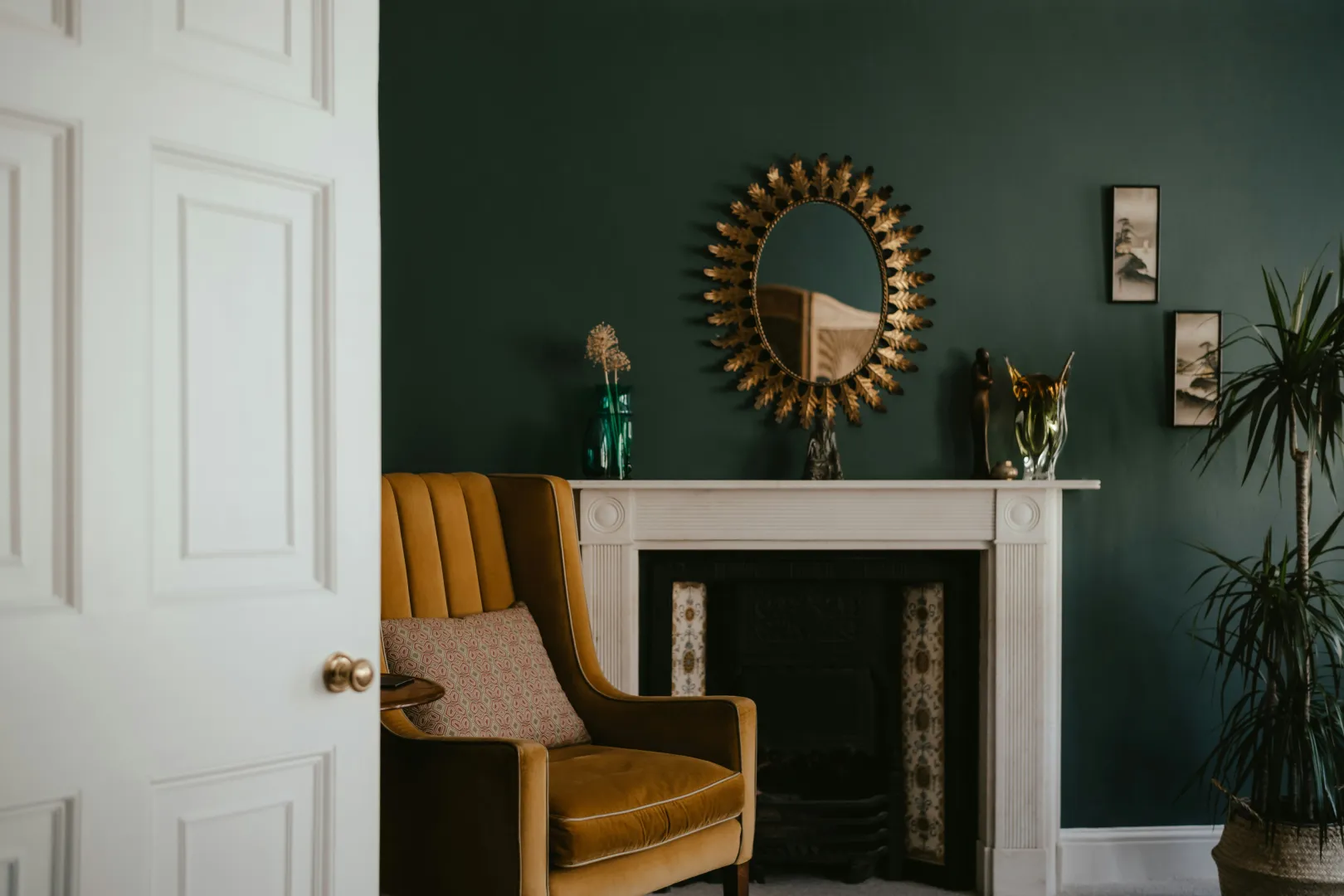

Moody interior design is an evocative and sophisticated style that moves away from bright, airy spaces to embrace rich, deep colors and shadowy aesthetics. It’s all about creating an atmosphere that feels intimate, cozy, and often dramatically elegant.
Choosing dark wall colors and upholstery adds a sophisticated (and sometimes mysterious) feel to your home, while soft textiles and atmospheric lighting help balance the intensity of a moody color palette.
Alexander Hugh
How to Perfect the Art of Moody Interior Design
Creating a successful moody interior is a meticulous process of balancing light, color, and texture. The goal is a space that feels enveloping and sophisticated, rather than simply dark. It requires a strategic approach to design elements, from the deep saturation of the walls to the soft, multi-layered light sources that define the room’s character and ambience.
1. Create a Moody Color Palette
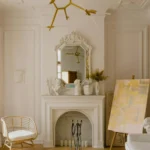
Start with saturated, deep hues that absorb light. Think emerald green , navy blue, charcoal, forest green, or deep plum. These colors are best applied to all four walls for a truly immersive effect. Crucially, don’t forget the ceiling; painting it a shade darker than the walls can pull the room in and make the space feel incredibly intimate and luxurious. Use warm metallic accents like brass or gold (as seen on the sunburst mirror in your main image) to prevent the space from feeling flat.
2. Think About Lighting
Lighting is the soul of a moody design. Forget harsh overhead fixtures and embrace layered lighting. You need three types: ambient (soft, indirect light), task (focused light for reading), and accent (to highlight art or architectural features). Use warm-toned bulbs (around 2700K) and incorporate multiple smaller sources—table lamps, floor lamps, and wall sconces—to create pockets of light and shadow. The play of light and shadow is what truly defines the “mood.”
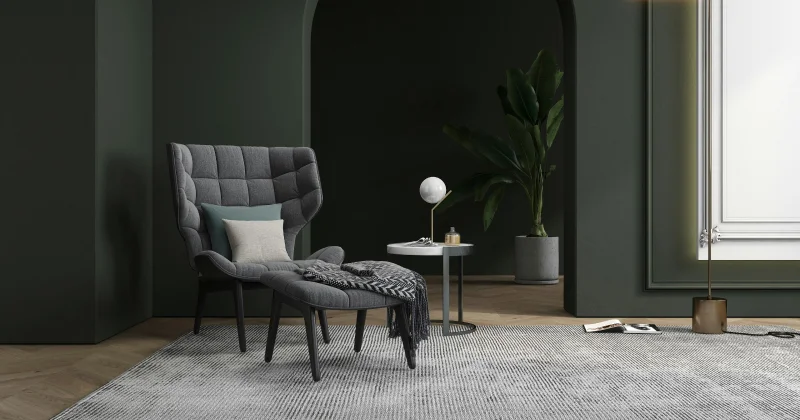
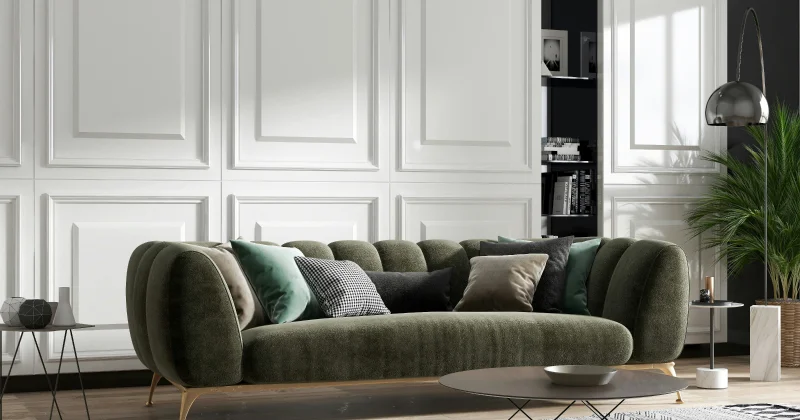
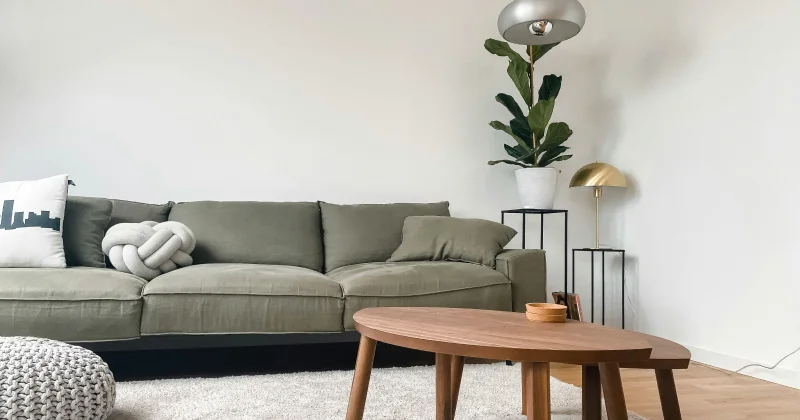
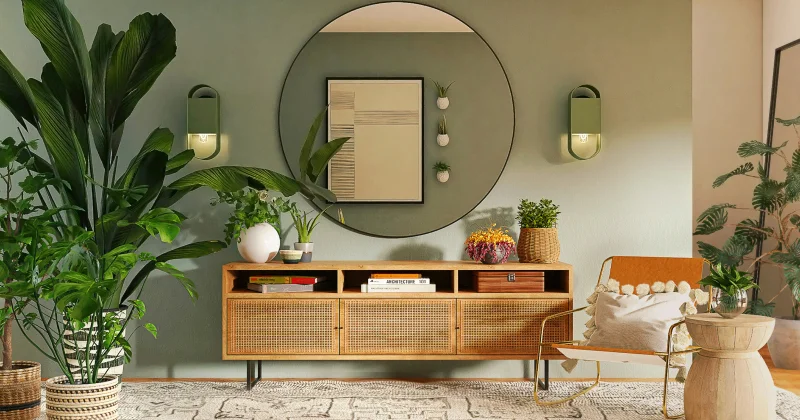
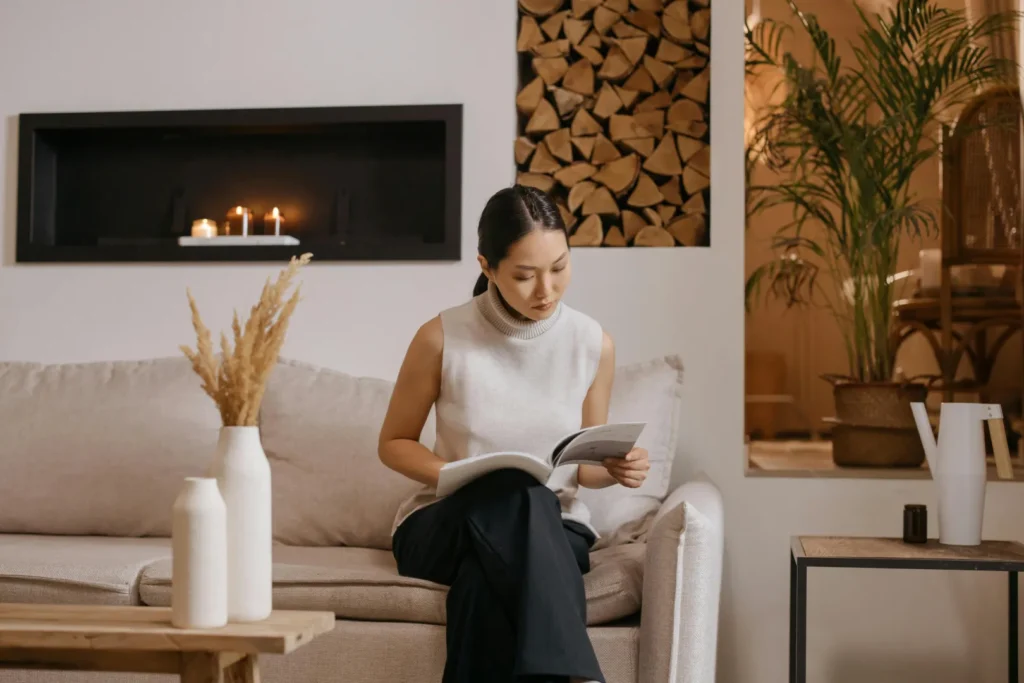
This illustrate the principle of contrast: the dark, rich backdrop is softened by the textured furniture, plants, and warm wood accents. This careful selection of furnishings is the final step in perfecting the mood.
3. Lean Into Patterns
A moody room is rich in tactile textures. Replace this heading with 3. Layer Textures for Depth. Introduce plush materials like velvet on a sofa, chunky wool or linen throws, and a vintage Persian rug to anchor the space. These tactile elements absorb sound and light, enhancing the cozy, enveloping feeling. Incorporate natural elements like dark wood furniture or stone, and consider subtle, tone-on-tone patterns in wallpapers or drapery to add interest without overwhelming the deep colors.
Magazine Quiz
Please complete all questions. Mark the best answer from the choices given.
5. Add Some Contrast
Their separate existence is a myth. For science, music, sport, etc, Europe uses the same vocabulary. Everyone realizes why a new common language would be desirable: one could refuse to pay expensive translators. To achieve this, it would be necessary to have uniform grammar, pronunciation and more common words. If several languages coalesce, the grammar of the resulting language is more simple. If several languages coalesce, the grammar of the resulting language is more simple. To an English person, it will seem like simplified English, as a skeptical Cambridge friend of mine told me what Occidental is. Their separate existence is a myth. For science, music, sport, etc, Europe uses the same vocabulary. Everyone realizes why a new common language would be desirable: one could refuse to pay expensive translators. To achieve this, it would be necessary to have uniform grammar, pronunciation and more common words.
Be the first to read my stories
Get Inspired by the World of Interior Design