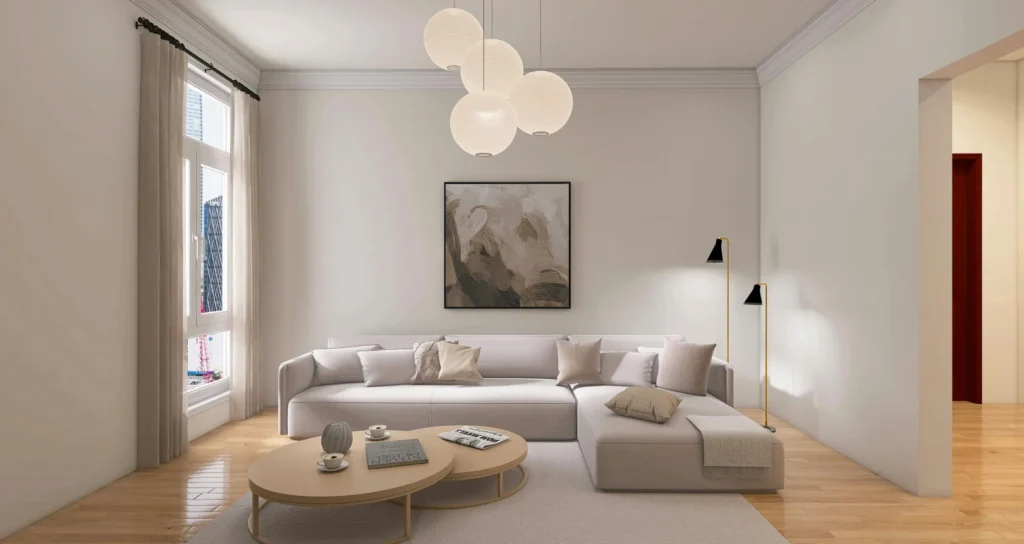
In this inspirational guide, we will explore various monochromatic living room ideas, each focused on a different color palette.

Modern Geometric Blue
To create a dynamic blue monochromatic scheme, use deep navy for a focal wall or large furniture, lighten to powder blue for textiles and curtains, and introduce accents in a crisp, icy light blue. Use texture—like a velvet sofa against a linen throw—to define zones. The “geometric” element is introduced through furniture shapes, like angular side tables or a graphic area rug, rather than additional colors.
Mid-Century Pink
This palette centers on blush pink and muted rose. Use the deepest shade, such as a dusty terracotta-pink, on one wall. Lighter shades like oyster pink and pale beige-pink are used for seating and accessories. The Mid-Century modern feel is achieved by pairing the color with warm woods (teak or walnut) and clean-lined furniture, allowing the subtle shifts in the pink hue to create depth.
Industrial Brown
This scheme uses the inherent monochromatic nature of earth tones. The base color is brown, ranging from the black-brown of aged leather and dark metal (the industrial element) to the medium brown of exposed wood beams and the light brown of natural jute rugs. The texture is critical here: mix smooth metals with rough brick or concrete, and soft wool with distressed wood to keep the all-brown palette from becoming flat.
- Warm, Earthy Base
- Layered Tones for Depth
- Layered Tones for Depth
- Mood & Atmosphere
Airy White
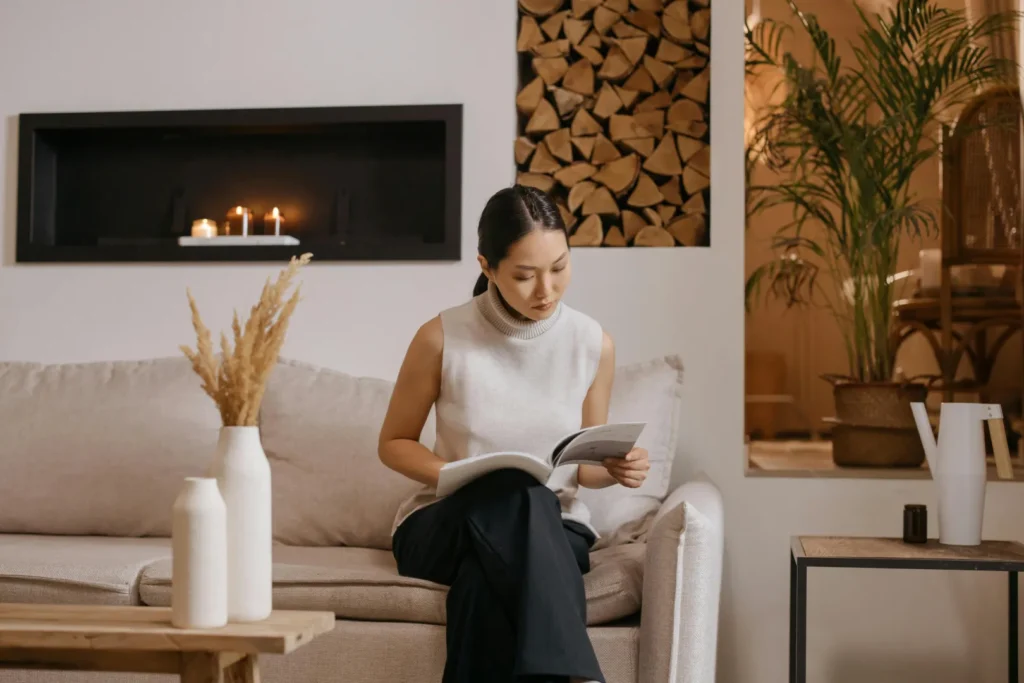
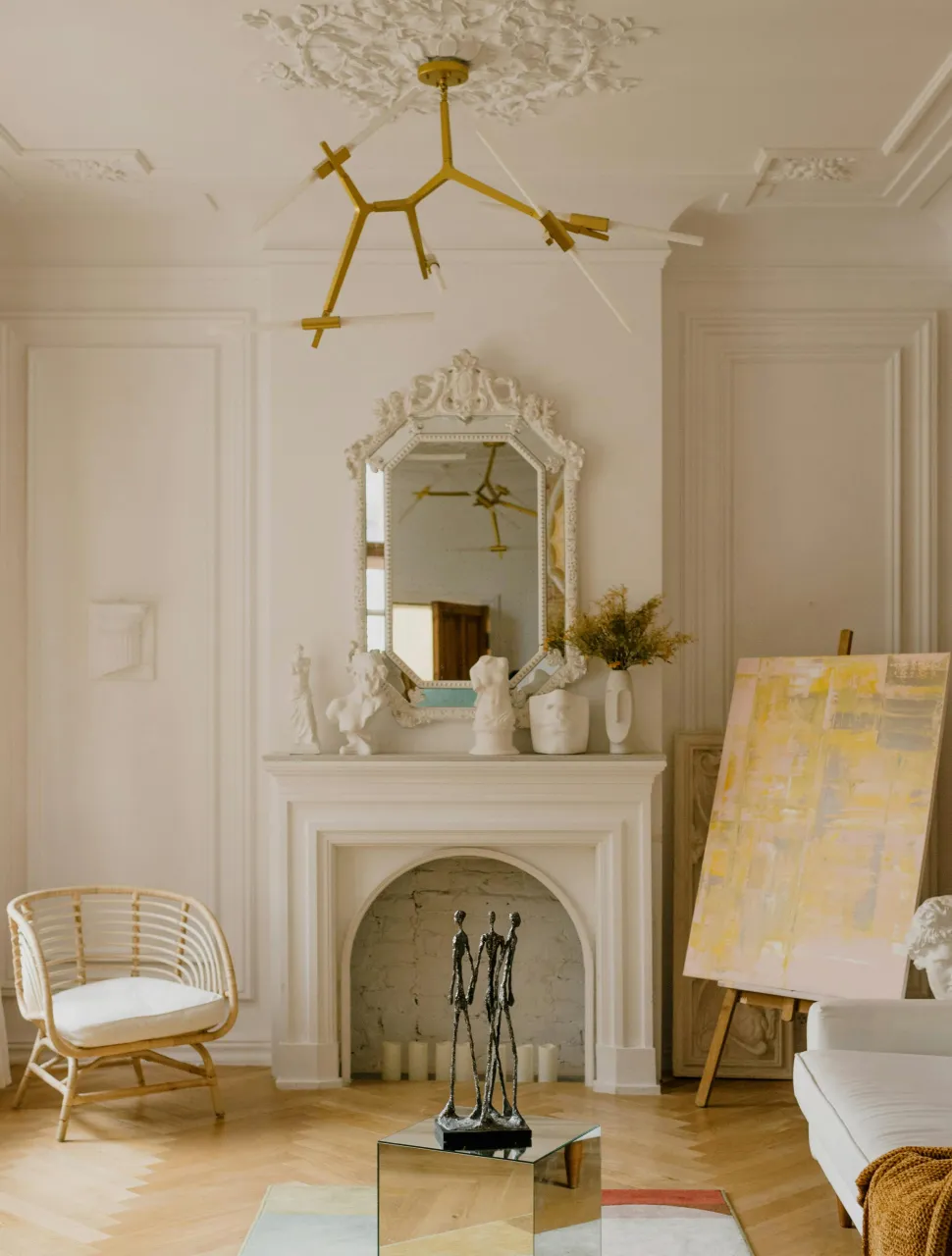
A white monochromatic space is the ultimate study in texture and light, perfectly illustrated in the main image. Use different shades of white, from a cool, crisp blue-white on trim to a warm, creamy off-white on walls, and a rich, textured ivory on fabrics. Introduce subtle gray or beige undertones—which are technically shades of white—in the flooring, ornate mirror frame, or the stone mantelpiece to maintain visual interest while keeping the feeling bright and open.
Lime Green
Since color is limited, monochromatic design relies heavily on texture and finish to create depth. Use metallic accents (brass, matte black), high-sheen surfaces (lacquer, glass), and varied textiles (velvet, wool, linen) to layer the space. Sculptural art pieces and unique lighting fixtures become focal points that provide necessary contrast and visual relief.
Luxurious Pink
To create a dynamic blue monochromatic scheme, use deep navy for a focal wall or large furniture, lighten to powder blue for textiles and curtains, and introduce accents in a crisp, icy light blue. Use texture—like a velvet sofa against a linen throw—to define zones. The “geometric” element is introduced through furniture shapes, like angular side tables or a graphic area rug, rather than additional colors.
Be the first to read my stories
Get Inspired by the World of Interior Design